

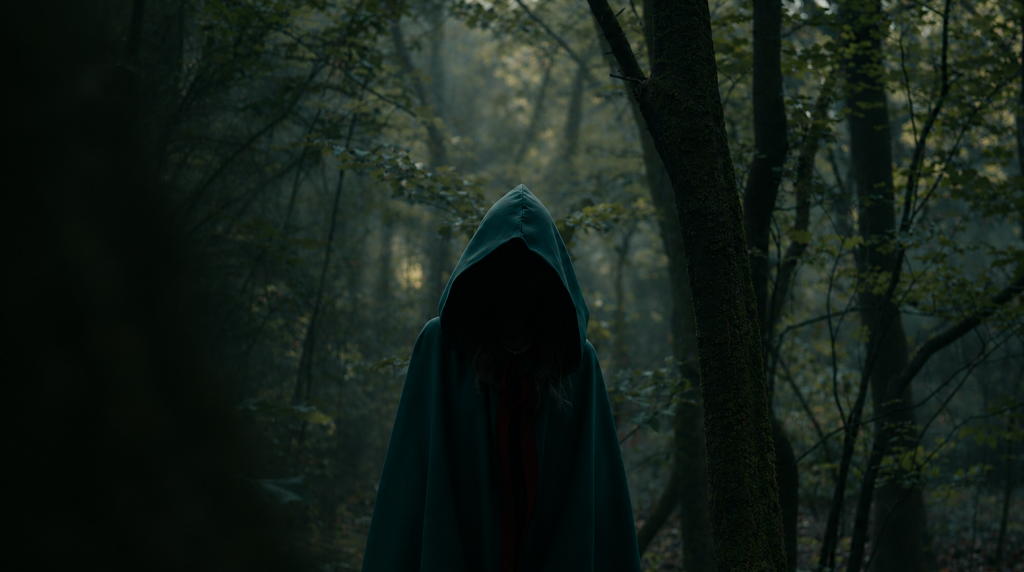
A memo to anyone who thinks primetime television is dying: Claudia Winkleman would like a word…
The second series of The Celebrity Traitors is another wildly popular instalment of a show that continues to captivate viewers nationwide. It’s compelling for many reasons: the deception, the backstabbing, how it exposes the perils of groupthink and the fundamental flaws of human nature.
Cynics will say it’s “just a game” (try telling that to Ross Kemp) – nobody actually gets murdered. But the fear of “murder” is real enough to the contestants, and the fear of banishment stronger still.
Nowhere is this more apparent than at the roundtable, the highlight of any episode, where players assemble to identify and banish a traitor in their midst. In these fateful conventions, accusations fly – ranging from the credible to the baseless – and contestants scrutinise each other’s words and behaviours to the nth degree. The atmosphere is edgy and confrontational. It sometimes gets intensely personal.
What makes the stakes feel so high? The prize money is one thing, particularly in the civilian version of the show. But, despite having (regrettably) never played the game myself, I suspect there’s something deeper going on.
In a society where our sense of belonging and worth is shaped largely by how others perceive us, the worst thing about banishment is surely what it reveals about your peers’ opinions of you. They don’t trust you. Something you’ve said or done has unsettled them. They’ve decided the group would be better off without you.
It’s little wonder contestants become so paranoid, so conscious of their behaviour, their relationships and, above all, what others think about them. The show is essentially one big, grandiose experiment in how people influence each other; a lesson in what good (and bad) communications can look like in our day-to-day lives.
Key to staying in the game, for the traitors and faithful alike, is the ability to shape perceptions. Knowledge only gets you so far; successful players control the narrative. They manipulate how others interpret events to divert suspicion elsewhere. They build alliances with people who trust them and accept their judgement. They sacrifice those who dare obstruct their route to victory.
In this way, The Traitors is designed to reward self-interest. Even the faithful must sometimes be willing to subvert the objectives of the group to secure their own survival. Winning requires a degree of calculated ruthlessness, whichever side you’re on.
The trick, one that so few players master, is knowing how to influence others without drawing too much attention to yourself. You don’t need to be the loudest voice in the room to be the most authoritative. Many of the strongest contestants go about their business in the shadows, happily allowing their more outspoken peers to attract unwanted scrutiny.
Some might even think the safest strategy is to say nothing at all, ducking out of the nightly witch hunt and presenting oneself as too harmless to pose any meaningful threat to the traitors. There’s certainly a case for knowing when to shut up – sometimes, speaking only adds fuel to a fire that might otherwise burn itself out. What was it Hamlet’s Queen Gertrude said about protesting too much?
But total silence carries risks of its own. Failing to challenge an accusation and convey your version of events simply leaves others free to rewrite the narrative for you, and that rarely ends well.
When people lack reliable information, they construct their own explanations by speculating. And once those beliefs take hold, however flimsy their foundations, changing them can be remarkably difficult. Confirmation bias sets in – every new event reinforces the theory and anything that contradicts it is overlooked.
In The Traitors, the early episodes are a prime example. Contestants have little evidence to work with, but someone still needs to be banished at the next roundtable. So, they read into everything: someone’s personality, demeanour, perhaps even their occupation – none of which reliably indicates whether Claudia anointed them a traitor in the first episode.
This is why it’s so important to take control of your own narrative from the outset. Doing so requires knowing not simply what to say, but how and when to say it. The roundtable repeatedly demonstrates how differently the same message can be received depending on the messenger’s delivery.
Presenting a sound argument is one thing; convincing your peers is another matter entirely. You need to know your audience, select your words carefully and have an instinctive understanding of tone. Overconfidence reeks of arrogance. Defensiveness implies guilt. These judgements aren’t always accurate or fair, but nor is being right any guarantee of being believed. The most convincing person in the room isn’t necessarily the one telling the truth.
The Traitors is a game about deception and betrayal, and I’m sure we can all agree that good communications in the real world should serve rather more honourable purposes. Nevertheless, the same principles are useful to think about in our professional and personal lives.
Our reputations are shaped not just by what we say but by what others say about us. Trust takes time to build and seconds to lose. A vacuum of information invites speculation. The timing and delivery of a message can matter at least as much as its content.
And when the votes are counted, the most persuasive version of the truth wins – whether it’s the right one or not.